
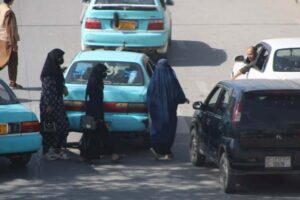
 | In Afghanistan, the Taliban are detaining women, even when they are wearing a hijab. Activists suspect that the issue of attire is merely a pretext used by the Taliban to hunt down critics of the regime.
|
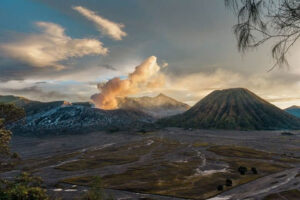 | For years, global discussions of disaster risk in the Pacific have been dominated by climate change. Rising seas, intensifying cyclones and coastal erosion have rightly captured international attention. This focus, while warranted, should be complemented by greater recognition of geohazards, which are just as consequential and in many cases, more immediately devastating. Addressing this gap […]
|
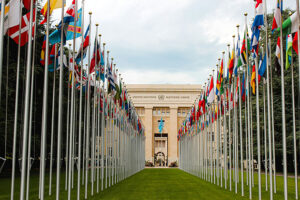 | The UN Human Rights Committee (the Committee) will adopt its first interpretation of Article 22 of the International Covenant on Civil and Political Rights (ICCPR). It has a unique opportunity to set what the right to freedom of association requires of States. Sixty years after the UN General Assembly adopted it, that provision remains without an authoritative interpretation, while restrictive legislation tests its limits worldwide.
|
 | As the world prepares for the 31st United Nations Conference on Climate Change (COP31) in Antalya, Türkiye, Kenya’s priorities for the negotiations are being shaped by lived experiences of communities who are on the frontline of the climate crisis. At the recently concluded annual Tharaka Biocultural Festival in Tharaka-Nithi County, farmers gathered to showcase, exchange […]
|
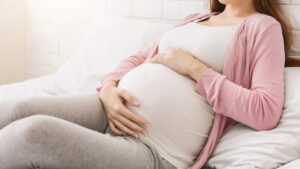 | Approximately 110 countries, including the United States, have fertility rates below the replacement level of 2.1 births per woman. In 2025, the U.S. fertility rate fell to a historic low of approximately 1.6 births per woman, extending a long-term downward trend that began in 2007 when the rate was still well above the replacement level […]
|
 | The world’s wealthiest people are driving a disproportionate share of climate pollution while poorer communities bear the heaviest costs of floods, heatwaves, food insecurity and other climate disasters, according to a new report by Oxfam International. The report, Disaster Divide: How Climate Chaos Deepens Inequality and Enriches the Few, published on October 27, 2026, argues […]
|
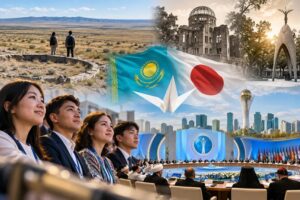 | Drawing on the experiences of Hiroshima, Nagasaki and Semipalatinsk, SGI has worked with Kazakhstan’s Foreign Ministry and United Nations mission to advance nuclear abolition. That cooperation is now extending into youth peace education and other initiatives through an institution supporting the Congress of Leaders of World and Traditional Religions.
|
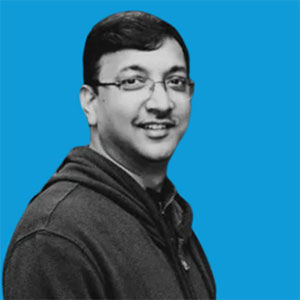 | CIVICUS discusses India’s Gen Z-led protest movement and civic space restrictions with Avinash Kumar, National Co-convenor of Wada Na Todo Abhiyan, a network that works on government accountability. Avinash is also a Distinguished Fellow at the Centre for Equity Studies. In India, the cockroach movement, a Gen Z mobilisation born out of satire, has […]
|
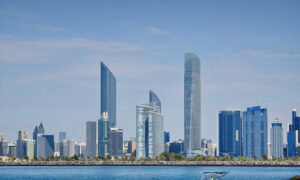 | I have stood on the corniche of Abu Dhabi at many moments over more than thirty years. Each time, I reflect on the distance this city has travelled: from a shoreline shaped by modest commercial buildings and dwellings to a capital whose architecture, institutions and ambitions look far beyond the horizon. Glass towers catch the […]
|
 | On November 2, the United States launched a series of limited, defensive strikes on Iranian targets on Qeshm Island and strategic areas along the Strait of Hormuz. Fired in response to earlier strikes from the Islamic Revolutionary Guard Corps (IRGC) on U.S. aircraft and drones over the Strait, U.S. President Trump noted that the operation […]
|
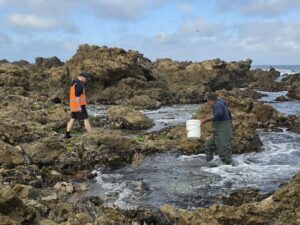 | From Fiji and Samoa to the Solomon Islands, Kiribati and Papua New Guinea, Pacific scientists are connecting research, monitoring and expertise to better understand how changing ocean chemistry is affecting the region's marine environments.
|
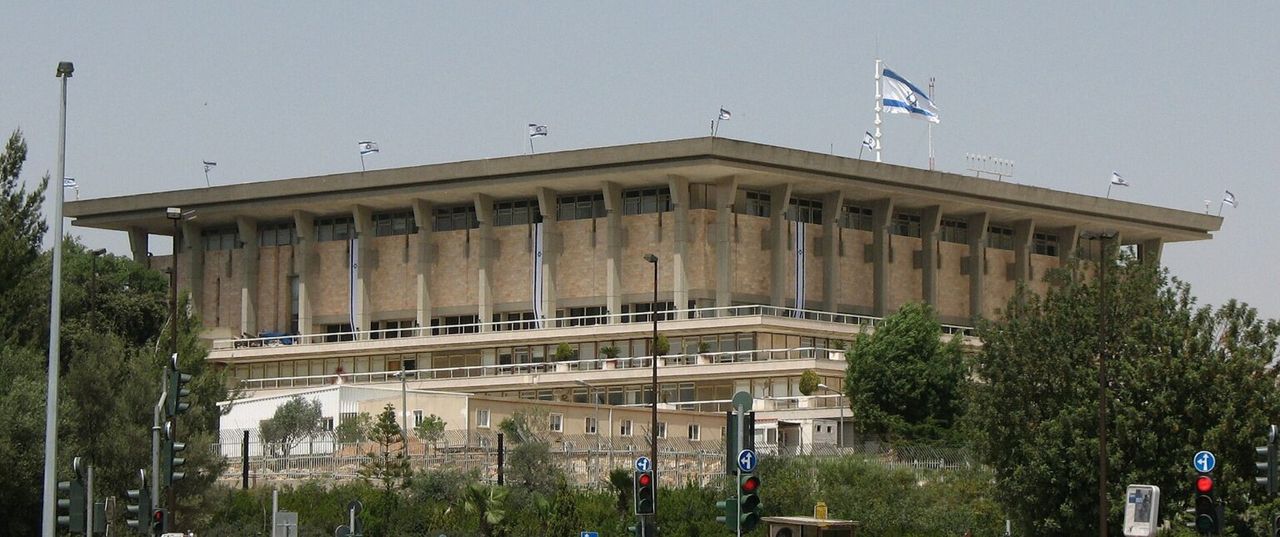 | As in previous elections, the latest Israeli national election offered people no real choice. They had to choose between bad Zionists and good Zionists. Thus, unsurprisingly, there is no clear winner – both major blocs are neck and neck as usual. The only difference this time is the Arab voting power. By uniting and turning […]
|
 | Article 109 of the UN Charter provides a mechanism for reviewing the Charter itself. It allows a General Conference of all UN members to be convened by a two-thirds vote of the General Assembly and a vote of any nine members of the Security Council. As the Article provides, “Each Member of the United […]
|
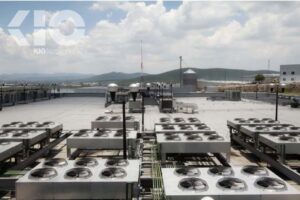 | At first glance, a data centre in Mexico draws little attention, as it is usually housed in an industrial park, out of public view. But, in addition to emitting greenhouse gases such as carbon dioxide (CO2) and nitrogen oxides, its cooling and fire suppression systems contain substances with strong environmental and health impacts: the so-called […]
|
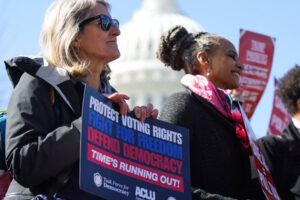 | In the run-up to the US midterms, armed federal agents have been knocking on the doors of voters suspected of being non-citizens. Republican-led states have redrawn electoral districts in their party’s favour, removing power from Black voters. Federal agencies have invaded people’s privacy, combing voter rolls for non-citizens while finding hardly any. The USA increasingly […]
|
 | This autumn I have found myself watching the evening news from Europe with a growing sense of recognition. Not of the tear gas or the burning barricades, which I deplore, but of the faces. Teenagers holding hand-painted signs. University students sleeping in tents in city squares. Young people who look, more than anything, tired of […]
|
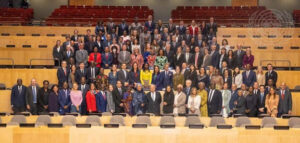 | In a bygone era, gender parity was never heard of at the United Nations—UN female staffers were mostly hired as secretaries and stenographers in a male-dominated Secretariat. Perhaps it was best illustrated in a wildly-circulated story, doing the rounds in the 1970s and 80s, about a female applicant, with strong academic credentials from a prestigious […]
|
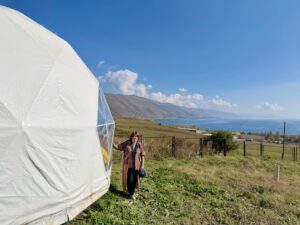 | In the second article on finance mobilisation and new funding commitments, IPS looks at how funding moves from the GEF to local communities and supports biodiversity conservation and ecosystem restoration on the ground.
|
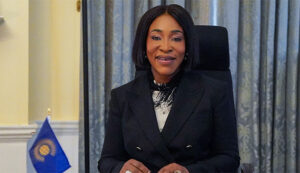 | Commonwealth countries are facing many challenges at their biennial meeting in Antigua this week. We are determined to change course.
|
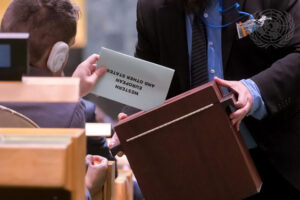 | On 13 October, Burundi won a second consecutive term on the UN Human Rights Council, the UN’s main human rights body. The CIVICUS Monitor rates civic space in Burundi as closed, the worst category. Its government has spent years silencing civil society, critics and opposition parties, including through extrajudicial killings, forced disappearances and torture. The […]
|
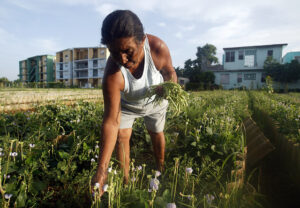 | A field at the edge of a growing city may be worth far more than its market price suggests. It may produce vegetables sold in nearby markets, support local livelihoods and provide green space in an increasingly built-up environment. It can also help cities manage water, adapt to climate shocks and strengthen local food supplies. […]
|
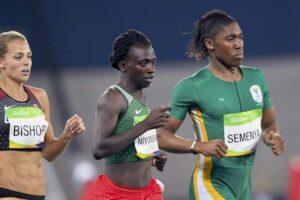 | Senegal is welcoming athletes and visitors from across the globe as part of the 4th Summer Youth Olympic Games, the first-ever Olympics in Africa. Lesbian, gay, bisexual and transgender (LGBT) African athletes, including from Senegal, have repeatedly participated in and won competitions–while advocating their rights to compete and speaking out against discrimination. In 2024, Cindy […]
|
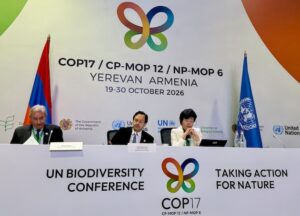 | This first part of a two-part series on biodiversity finance at CBD COP17 examines the status of finance mobilisation and new funding commitments.
|
|


Copyright © IPS - Inter Press Service -- All rights reserved. IPS Inter Press Service · Via Sabotino 45 · Rome, Italy 00195 · Italy |
